

Networking and events · 5 min read
How to Start a Conversation at a Networking Event: 15 Openers
Learn how to start a conversation at a networking event with 15 simple openers, follow-up questions and polite exits. Useful for salespeople at any conference.
Agent Q
Every handshake, a lead you can see.
QR and NFC business cards your company controls: always current, switched off when someone leaves, every scan a lead.
Book a free demoSee how it worksKnowing how to start a conversation at a networking event is the skill that makes everything else possible. You can have the best product and a polished introduction, and still stand by the coffee table with your phone because you cannot think of the first sentence.
The good news is that the first sentence does not need to be clever. It needs to be friendly, easy to answer and about the other person or the event. Below are fifteen openers, ways to keep the conversation going and a few graceful exits.
Rules for a good opener
- Keep it short and low-pressure.
- Ask about the event or the person, not your product.
- Ask open questions that need more than a yes or no.
- Smile, make eye contact and check that the person is free to talk.
- Listen to the answer and follow it.
Avoid asking 'What do you do?' as the very first line, which can feel like a sorting question. Try something warmer and more specific, then reach that topic naturally.
Remember that most people at a networking event feel as unsure as you do. A friendly approach is usually received as a relief, not as an interruption.
Fifteen openers that work
About the event
- 'What made you decide to come today?'
- 'Which session has been the most useful so far?'
- 'Is this your first time at this event?'
- 'Have you found any stands worth visiting?'
- 'What are you hoping to take away from the day?'
About them
- 'What are you working on at the moment?'
- 'How did you get into this field?'
- 'What has been the best part of your week?'
- 'What is the biggest change you have seen in your industry this year?'
- 'What would you be doing today if you were not here?'
Situational
- 'That was a good point from the speaker. What did you make of it?'
- 'I do not think we have met. I am [name].'
- 'Mind if I join you? I am new to this event.'
- 'Do you know whether the next talk is worth staying for?'
- 'Can I ask how you found the venue? I am looking for a good place for next year.'
Choose two or three openers you like and make them your own. Rehearse them quietly so they come out naturally. A line you say in your own voice works better than the best line borrowed from a list.
Keep the conversation going
The first line only opens the door. Keep going with simple techniques.
- Follow-up: pick one word from their answer and ask about it. 'You said hiring is hard. What is the hardest part?'
- Reflect: repeat back what you heard in your own words.
- Share a short, relevant story of your own, then ask them a question again.
- Connect: 'You should meet [name], who is working on something similar.'
People like talking about themselves. If you listen well, you will be remembered as a good conversationalist, even if you said little. For quieter networkers, see conference networking for introverts.
Notice when a conversation is not working, such as short answers, glances elsewhere or crossed arms. That is not a failure. A brief, kind exit and a new conversation are better for both of you than forcing it.
Joining a group and leaving gracefully
Joining a group
Stand near the group, make eye contact and wait for a pause. Then say, 'Mind if I join?' or add a short comment on the topic. Groups with an open gap in the circle are usually welcoming. Closed pairs facing each other are best left alone.
Leaving
- 'It has been great to hear about this. I will let you meet others. May I send you that article?'
- 'I want to catch the next session, but I would like to carry on talking. Can we swap details?'
- 'Let me introduce you to [name], and I will go and say hello to someone I promised.'
A warm exit is as important as a warm start. People remember the last moment.
Remember names. Repeat the name once when you hear it, and use it once or twice during the conversation. If you forget, say 'I am sorry, I have forgotten your name' in a friendly way. People rarely mind.
Local habits in the USA, UAE and India
Openers travel well, but pace differs. In the USA, a quick friendly question and a move to what you do is normal. In the UAE, begin with a courteous greeting and some interest in the person before business. In India, a respectful tone and a little extra time at the start build trust, and finding a mutual acquaintance is a strong opener.
Follow the other person's lead. If they slow down, slow down. For more on networking habits, see networking tips for salespeople.
If you are hosting an event yourself, these same openers help you greet guests. Walk the room, welcome people who stand alone and introduce them to others. Hosts who do this are remembered long after the event.
How Agent Q helps after the opener
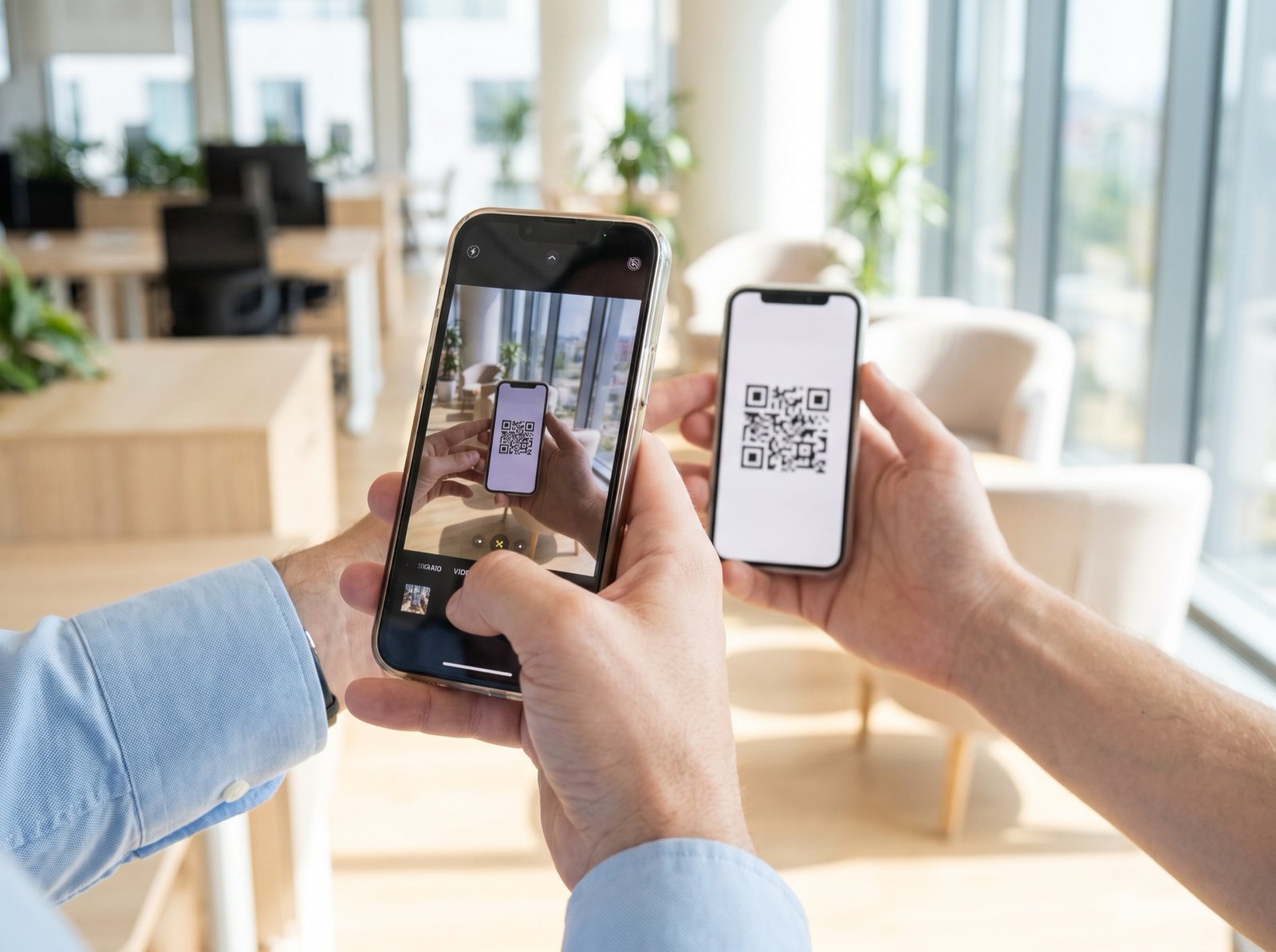
Once the conversation is going well, the next step is to share details. With Agent Q, you offer a smart QR and NFC card controlled by your company. The other person scans or taps, with no app, and gets your details in a second. They can leave their own name and number.
It saves the awkward search for a card or the spelling of an email, so the conversation continues naturally. See the pages for field sales teams and for people who lead sales teams.
Try one new opener at your next event instead of all fifteen. Small experiments teach you what suits your voice.
Personal digital card or company card?
Anyone can now make a personal digital card in a minute, and many of your people will. That is good news: clients are used to scanning and tapping. But a personal card carries the employee's own design, sends leads to them, and leaves with them. For a sales team, the card should belong to the company.
| Personal digital card | Company card (Agent Q) | |
|---|---|---|
| Who issues it | The employee, on a personal account | The company, for every employee |
| Brand and design | Whatever each person picks | Your brand; the layout is locked by an admin |
| When someone leaves | The card and the contacts leave too | One switch: the card points to a colleague or your page |
| Leads from scans | Go to the person | Captured for the company, counted per salesperson |
| Scale and control | One person at a time, no audit | Thousands of staff, synced from HR, every change logged |
Read more: company digital business cards · India · Dubai and the UAE · USA · a card policy you can copy
Frequently asked questions
How do you start a conversation at a networking event?
Use a short, friendly question about the event or the person, such as 'What made you decide to come today?' Smile, make eye contact and listen to the answer. Follow up on one detail instead of rushing to talk about your own work.
What are good icebreakers for business events?
Ask which session they liked most, whether it is their first time at the event, what they are working on or what they hope to take away. These are easy to answer and open a real conversation without feeling forced or salesy.
How do you join a group conversation at a networking event?
Stand near the group, make eye contact and wait for a pause. Then ask 'Mind if I join?' or add a brief comment on the topic. Groups with an open gap in the circle are usually welcoming, while closed pairs facing each other are better left alone for now.
How do you end a conversation politely at a networking event?
Thank the person, say something specific about what you enjoyed and offer a reason to move on, such as meeting others or attending a session. Suggest keeping in touch, share your details and promise to send anything you mentioned. A warm ending is remembered as much as the opening.
Turn every handshake into a lead you can see
Agent Q gives every employee a QR and NFC card your company controls: always current, switched off when someone leaves, and every scan can become a lead.